
The rapid advancement of artificial intelligence has brought a significant crisis of agency to the forefront: the “black box” problem. As developers and enterprises race to build sophisticated systems, they are increasingly forced into a Faustian bargain with proprietary platforms where underlying logic is hidden and data usage is opaque. This lack of transparency isn’t just a technical hurdle; it’s a fundamental barrier for any organization requiring high levels of trust, security, and sovereign control over their intelligent systems.
Beyond the transparency issue lies the practical shackle of dependency. Building autonomous systems within closed ecosystems creates a “walled garden” effect, where scaling becomes a victim of extractive pricing and architectural flexibility is sacrificed for the convenience of the provider. We are seeing a growing movement of innovators who refuse to be trapped in these restrictive, high-cost environments that dictate how their own agents must function and who owns the resulting intelligence.
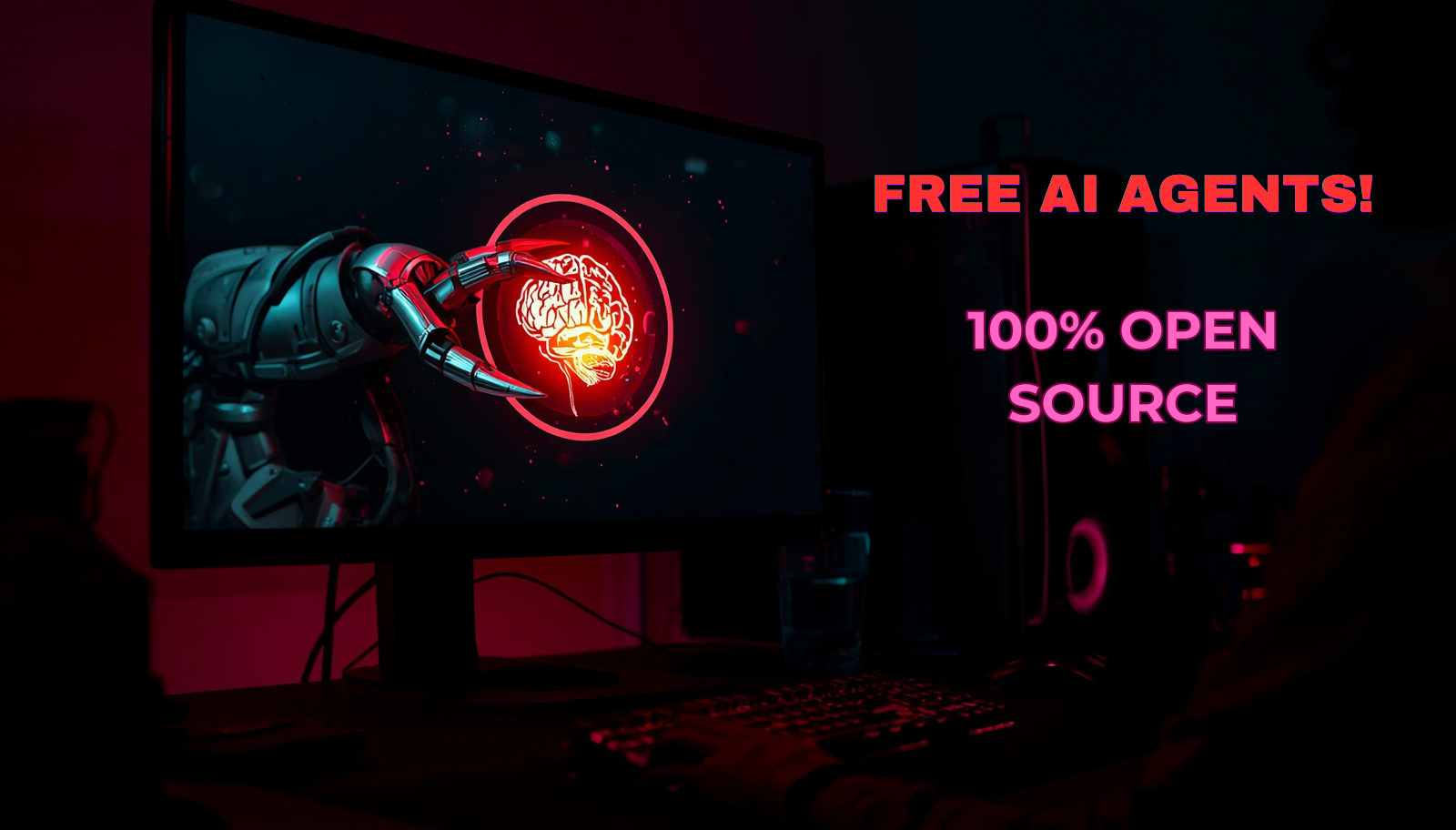
OpenClaw emerges as the essential key to this liberation. It is a fully open-source infrastructure designed specifically for building, deploying, and managing powerful autonomous AI agents without the proprietary tax. By providing a “Fully Open-Source Alternative for Building Powerful AI Agents,” OpenClaw offers a robust framework for those who demand sovereignty over their technology stack while leveraging the absolute cutting edge of agentic AI.
1. The Death of Vendor Lock-In
The most disruptive advantage of the OpenClaw framework is its aggressive dismantling of the proprietary model. By prioritizing “No Vendor Lock-In,” the framework shifts the power balance from corporate boardrooms back to the developer community. This isn’t just about saving on licensing fees; it’s about “Community Driven Development” that fosters transparency and trust, which are non-negotiable for enterprise-level deployments.
Strategically, this open-source approach accelerates the development cycle through parallelized debugging and global peer review—something no closed-door laboratory can match. Because the framework is supported by a transparent, community-supported ecosystem, it evolves at the speed of the collective rather than the roadmap of a single vendor. This ensures that the technology remains cost-effective, accessible, and perpetually innovative.
KEY STAT: RAPID INNOVATION & COMMUNITY-DRIVEN EVOLUTION By eliminating licensing restrictions and fostering a global contributor network, OpenClaw enables a development velocity that bypasses the “walled garden” delays of proprietary competitors, ensuring the infrastructure for intelligence remains a public good.
2. True Autonomy is Not Just Automation
Most “AI assistants” on the market today are merely glorified scripts disguised as agents. OpenClaw, however, achieves “High Autonomy & Self-Governance” by allowing agents to operate independently to achieve complex goals. These agents don’t just follow a path; they learn from interactions and adapt to new situations without the need for constant human hand-holding.
Self-Directed Task Execution Agents possess the internal logic to determine the exact sequence of steps required to complete a high-level objective. This removes the need for humans to micro-manage every sub-task or API call.
Adaptive Learning The system is built to improve performance based on environmental feedback and historical interaction. This ensures the agent becomes more efficient and accurate the more it is utilized within a specific domain.
Goal-Oriented Behavior Every action taken by an OpenClaw agent is mathematically aligned with the final desired outcome. This focus prevents “hallucination loops” and keeps the system productive even when faced with ambiguous instructions.
3. The “Cognitive Stack”—Memory and Tools
To handle real-world workflows, an agent needs more than just a language model; it needs a “Cognitive Stack.” OpenClaw excels here by providing “Dynamic Tool Integration & Persistent Memory Access.” This is the critical infrastructure that allows an agent to bridge the gap between thinking and doing.
The framework allows agents to autonomously access search engines, coding environments, and calculation APIs to extend their utility. This is paired with a sophisticated memory system that handles both short-term context and long-term storage across different sessions.
“Agents can access and utilize various tools and APIs… and retrieve information across tasks.”
This persistent memory is the “missing link” for complex AI workflows. Without it, an agent is amnesic; with it, an OpenClaw agent can remember previous steps, recall user preferences, and utilize historical data to inform its current decisions, creating a seamless experience for long-term projects.
4. The Power of the “Hive Mind” (Multi-Agent Collaboration)
The era of the “monolithic model” is over; the future belongs to “Seamless Multi-Agent Collaboration & Orchestration.” OpenClaw recognizes that complex problems are best solved by specialized experts working in tandem. By decomposing massive tasks into manageable sub-tasks, the framework allows for a “hive mind” approach to problem-solving.
This collaborative orchestration relies on three core components:
- Coordination: Managing the workflow to ensure agents are synchronized and not duplicating efforts.
- Communication: Enabling the real-time exchange of data and insights between different specialized agents.
- Shared Goals: Aligning the entire multi-agent swarm toward a single, unified objective.
This allows for the automation of intricate business workflows—such as simultaneous data analysis, report generation, and software coding—where each agent plays a specific, optimized role.
5. From Download to Deployment in Minutes
The myth that open-source infrastructure is “too complex” for rapid deployment is dead. OpenClaw provides a “Streamlined Python Environment Setup” that lowers the barrier to entry to almost zero. For Windows users especially, the “Easy Windows Installation Process” means you can go from a blank terminal to a running agent in under five minutes.
The technical setup is remarkably straightforward, requiring only Python and Git:
- Clone the Repository: Use
git cloneto pull the source code. - Environment Setup: Create an isolated virtual environment using
python -m venv openclaw_envto ensure stability. - Install Dependencies: Run
pip install -r requirements.txtto install the necessary libraries.
Once the environment is ready, you can deploy your first intelligent agent by simply running:
python run_agent.py –task “Analyze data”
This ease of deployment proves that power doesn’t have to be complicated. By minimizing the friction of installation, OpenClaw allows developers to focus on innovation rather than troubleshooting prerequisites.
The Final Word
OpenClaw is more than just a tool; it is a fundamental shift in the power dynamics of the AI era. By providing a fully open-source infrastructure for self-governing, tool-using, and collaborative systems, it empowers the individual developer to build at a scale previously reserved for massive AI corporations.
The proprietary “black box” is no longer the only option. We are moving into an era where “Community Power” dictates the trajectory of intelligence. If the infrastructure for building the world’s most advanced autonomous systems is now free, open, and sitting on your desktop, the only remaining question is: what is stopping you from building the next great autonomous system?